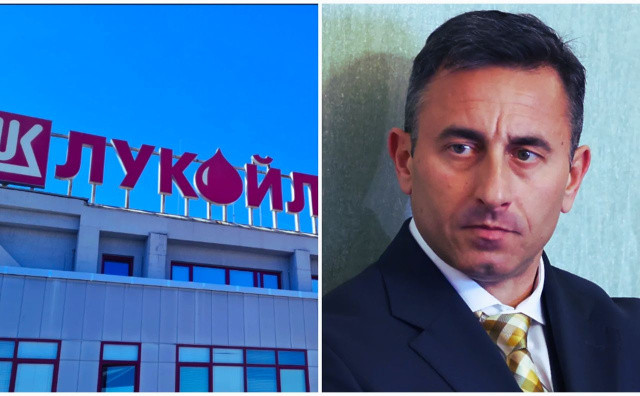
Former Economy and Energy Minister Rumen Ovcharov sharply criticized the management of Lukoil under special manager Rumen Spetsov, describing the results as “catastrophic” after Parliament moved to limit the powers of the state-appointed administrator.
Speaking to Bulgarian National Radio, Ovcharov argued that the refinery’s production policy had caused serious financial losses, particularly regarding aviation fuel. According to him, jet fuel is currently the refinery’s most profitable product, yet output has remained far below capacity for two consecutive months.
“The refinery can produce 43,000 tons of aviation fuel per month. In April, only 15,000 tons were produced. This month it will be 18,000,” Ovcharov said. He claimed the decision was economically irrational because the difference in profit margins between aviation fuel and diesel reaches around 130 dollars per ton.
In his view, the explanation lies in export arrangements linked to companies selected by the management. “The companies chosen for export cannot export aviation fuel, so they export diesel instead,” he argued.
Ovcharov also warned that Bulgaria faces risks in the arbitration case already launched by Lukoil against the state. According to him, Spetsov’s actions have weakened Bulgaria’s position. He criticized the dismissal of Lukoil representatives from company management as well as the removal of the production director at a time when the refinery is operating under more complicated technological conditions.
“In a situation like this, experienced managers of the production process are needed,” he said, adding that the current administration has shown it cannot maintain working relations with the Russian side. “Someone should be appointed who can at least help solve the arbitration problem,” Ovcharov insisted.
The former minister identified developments at Kozloduy Nuclear Power Plant, Lukoil Neftochim, and Bulgartransgaz as the key indicators for the future of Bulgaria’s energy sector.
Ovcharov also commented on the first steps taken by the government of Prime Minister Rumen Radev. He said the cabinet was moving in the “right direction” on issues such as the budget, inflation, and state spending, although he cautioned against excessive political self-promotion.
According to him, the country’s biggest problem remains rising public spending and debt. He pointed out that Bulgaria paid nearly one billion euros last year to service old debt obligations and warned that the amount could rise to two billion euros annually by 2030. He noted that public debt had increased from around 23 percent of GDP to approximately 29 percent.
“This constant cycle of rising expenses is madness,” Ovcharov said. At the same time, he questioned how the government planned to deal with salary and pension spending in the future. He defended pension indexation under the so-called Swiss rule, arguing that it merely preserves purchasing power rather than constituting a real increase in pensions.
However, he criticized what he described as disproportionate spending hikes in other sectors. “Last year defense spending was doubled, while Interior Ministry expenses increased by 50 percent. Are we going to continue like this?” he asked, suggesting that at minimum the mechanism for automatic increases should be reconsidered.
On the issue of prices, Ovcharov said the idea of a “fair price” should not be interpreted as introducing price caps. Instead, he argued that greater transparency in markups and supply chains would naturally lead to lower prices. “If everything becomes visible – the processes, the markups, the additional charges – then prices should fall and it will become clear where the biggest profits are being made,” he commented.
He also defended proposed parliamentary procedure changes supported by “Progressive Bulgaria”, rejecting criticism that they threatened democratic practices. Ovcharov argued that Parliament had drifted away from normal legislative work during years of political instability and repeated elections. “They turned ministers into permanent guests in Parliament simply to fill time,” he said. In his words, the institution now needs to return to its traditional functions.
Asked about the political future of Krum Zarkov, Ovcharov outlined what he described as three possible paths. According to him, Zarkov could either step aside and wait for others to solve the party’s problems, seek unity with Rumen Radev, or launch a direct internal struggle for influence within the socialist movement. Ovcharov argued that such a fight would require breaking ties with figures such as Delyan Peevski, Boyko Borisov, and Kiril Dobrev.