
A new Alpha Research survey shows strong public optimism in Bulgaria regarding the country’s ability to organise Eurovision 2027, following what is described as Bulgaria’s win secured through the success of DARA’s “Bangaranga.”
The study suggests that public sentiment has shifted notably toward confidence in national institutions. According to the results, 57% of respondents believe Bulgaria and Bulgarian National Television will handle the organisation of the contest successfully. Another 36% expect some difficulties but still believe the overall outcome will be positive, while only 7% remain fully skeptical and anticipate major problems.
The report frames this shift as a rare moment of collective optimism in Bulgarian society, linking it to what it calls a broader sense of achievement and momentum after the country’s Eurovision-related success. It also notes that such positive attitudes are uncommon compared to previous levels of public trust in large institutional projects.
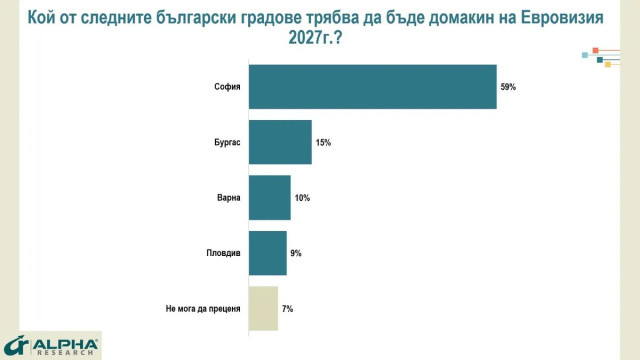
City preferences for hosting the event are also included in the survey. Sofia is the clear leader, supported by 59% of respondents, significantly ahead of other potential hosts. Burgas follows with 15%, benefiting from its growing role in cultural events and active promotion. Plovdiv and Varna are mentioned as alternatives but remain far behind in public preference.
Respondents also identify the expected benefits of hosting Eurovision. The most frequently cited advantage is improved international image and visibility for Bulgaria, mentioned by 72%. Tourism development follows at 63%, while 39% point to benefits for local businesses. Additionally, 33% expect infrastructure improvements in the host city, and 31% see positive effects for artists and cultural creators.
The survey concludes that beyond practical considerations, the most important impact may be psychological, contributing to a more positive national self-image and greater confidence in Bulgaria’s ability to succeed in large-scale international events. It stresses that maintaining this public mood will be crucial in the period leading up to the contest.
The data are based on a representative express survey conducted by Alpha Research among 800 adults between May 18 and May 21, 2026, using a stratified two-stage quota sample and face-to-face interviews conducted with tablets in respondents’ homes.