
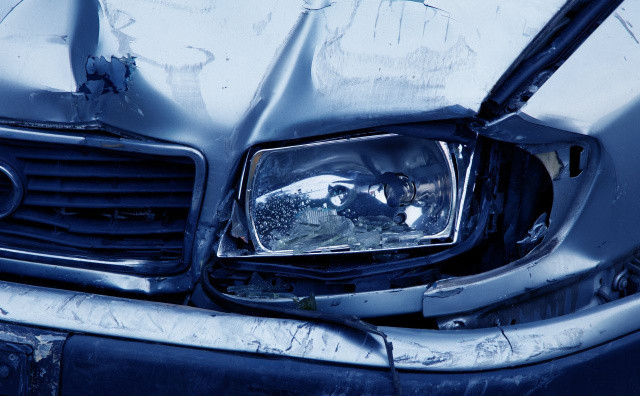
Four dead on Chelopeshko Shose after two cars raced each other at roughly 150 km/h into a city bus. Two teenagers killed near Mezdra by a driver with five months behind the wheel. Two nine-year-old footballers and a father dead on the Trakia highway after a truck with twenty prior violations on its record crossed the median. A truck tearing through guardrails on the Struma highway less than a day later. All of this happened within about three weeks of each other, in June 2026 alone.
This is the most predictable season in Bulgaria and the country keeps acting surprised by it.
The pattern is well documented, even if nobody seems to act on it. By the European Commission’s preliminary 2025 figures, Bulgaria now has the highest road fatality rate in the European Union, at 71 deaths per million inhabitants, well above the EU average, which stood at 44 the year before. Bulgaria did not reach that ranking by getting worse. Its rate fell from 74 per million in 2024, but Romania’s dropped faster, from 78 to 68, and that was enough to push Bulgaria into first place. When the 2024 numbers came out, the reassuring line from responsible institutions was that Bulgaria ranked second rather than first, as if not leading the deadliest category in Europe were an achievement, and within a year even that small consolation had expired. The seasonal pattern within the numbers is just as well established. The country’s own statistics institute found that August was the deadliest month of 2023, with 61 road deaths, nearly double the 32 recorded in April. Bulgarian officials have acknowledged for over a decade that July, August and September produce the highest death tolls, the months when people travel for vacation, when more cars are on the road, and when, it seems, something shifts in how people drive. Every year the numbers climb through summer. Every year they recede by autumn. Every year the conversation about why resets to zero.
Part of the explanation is mentality, and Bulgarians do not need a foreigner or a statistic to tell them that. Summer here changes how people behave behind the wheel. Expensive cars driven by twenty-somethings with a few months of experience. Street races on public roads, the kind investigators say were happening at 150 km/h on Chelopeshko Shose. A casual disregard for speed limits that would be considered reckless almost anywhere else in Europe but barely registers as news here until someone dies. None of this is unique to summer, but summer is when it concentrates, when more young drivers are out, more money is flashed, more risks are taken because the season itself seems to suspend the rules.
Part of it is infrastructure, and this part is not a matter of opinion. The roads themselves are part of the problem. More than half of Bulgaria’s road fatalities, around 52 percent, happen on rural roads rather than motorways, a reflection of decades of underinvestment outside the capital and the main corridors. Motorway speed limits run as high as 140 km/h, among the highest in the EU, and the alcohol limit for professional drivers is more permissive than in most member states. Add a truck with twenty unresolved violations crossing into a family’s lane, a driver with a Czech license and a year of experience racing through central Sofia, and the infrastructure argument stops being abstract. It becomes a body count.
And part of it, the part that should make every Bulgarian angry rather than just sad, is impunity. A driver accumulates twenty traffic penalties and is still allowed behind the wheel of a multi-ton truck. Two men with a year of driving experience apiece are racing through a city, with previous violations already on record, before they kill four people. The Interior Minister calls for “urgent action” after a truck rips through a highway barrier, but urgent action after the fact is not a road safety policy. It is a eulogy with extra paperwork. Bulgaria knows who its repeat offenders are. It simply has not built a system that takes their licenses away before they take someone’s life.
What makes this worse is the seasonal amnesia, and Bulgaria has already lived through a recent version of it. In March 2025, a truck crossed into oncoming traffic and killed a twelve-year-old girl named Siyana, and the country erupted. There were protests in cities across Bulgaria against what people called the war on the roads, demands for accountability, promises of inspections and reform. Fifteen months later, a truck crossed into oncoming traffic on the Trakia highway and killed two nine-year-old boys and a father. The crash was almost identical. The public anger that followed Siyana’s death had already faded, and the conditions that produced it had not changed at all.
The cycle is the same on a yearly scale. When autumn comes, the death toll drops, not because anything fundamentally changed but because fewer people are on vacation, fewer young drivers are testing expensive cars at high speed, and the weather no longer invites it. And with the lower numbers comes a lower temperature in the public conversation. The minute of silence in parliament fades. The headlines move to other things. The same roads, the same enforcement gaps, the same lack of consequences for repeat offenders carry over into the next year’s summer, waiting for the cycle to begin again.
This is the real failure, more than any single crash. Bulgaria does not lack information about why people die on its roads in June, July and August. It has had that information for over a decade, repeated by its own transport officials and confirmed by the European Commission year after year. What it lacks is the institutional memory to treat summer as a recurring emergency rather than a recurring tragedy. An emergency gets resourced ahead of time: checkpoints before the peak season starts, license suspensions that actually stick, infrastructure spending aimed at the rural roads where most of the deaths happen, real restrictions on inexperienced drivers operating high-powered cars. A tragedy gets a press conference, a minute of silence, and a promise that something must change, made by people who know that by October nobody will be checking whether it did.
Two nine-year-old boys who were supposed to play in a football tournament in Albena will not get another summer. Neither will a seventeen-year-old riding home with his girlfriend on a moped, both wearing their helmets, both doing everything right except sharing a road with someone who was not. They are not abstractions in a Eurostat table. They are what the second-worst road fatality rate in the EU actually means, repeated every June like clockwork, and forgotten every November like clockwork too.
If Bulgaria wants next summer to look different, it has to decide that the bloodbath is not the weather. It is a policy choice, made and remade every year by inaction, and the only season that can break it is the one between the tragedies, when nobody is paying attention.