
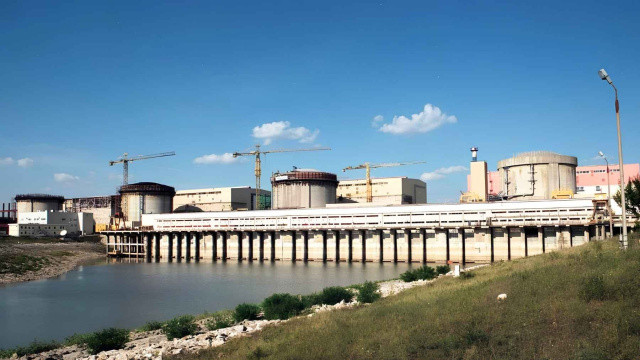
Romania has begun the controlled shutdown of the second reactor at the Cernavoda Nuclear Power Plant because of the critically low level of the Danube, which provides water used to cool the plant’s turbine condensers. The operator, Nuclearelectrica, said the shutdown process started at 7 a.m. and was expected to be completed by around 11 a.m., citing the “critically low flow of the river.”
The move comes after the first of the plant’s two reactors was shut down at the end of July because of the same problem. The Cernavoda plant has two 700-megawatt units and normally accounts for about 20% of Romania’s electricity production. The current shutdowns are the first of their kind at the facility since the severe drought of 2003.
The Danube’s flow is continuing to fall sharply. According to Romania’s National Institute of Hydrology and Water Management, the river is expected to have a flow of only 1,350 to 1,400 cubic meters per second as it enters Romania between August 12 and 19. That is far below the long-term August average of about 3,900 cubic meters per second.
Romanian authorities have already taken emergency measures to try to increase the amount of water available around the nuclear facility. The Energy Ministry ordered a rock formation to be removed, dredging work was carried out on the riverbed, and four barges loaded with rocks were sunk to form a makeshift barrier intended to redirect the river’s flow. Authorities said the measures raised the water level around the plant by about 4 centimeters.
Romania is expected to compensate for the loss of nuclear generation through alternative sources, including wind power, as well as electricity imports. Authorities have also urged households and businesses to practice “responsible consumption” and voluntarily reduce electricity use during evening peak hours.
The low Danube is also being closely monitored in Bulgaria, where the Kozloduy Nuclear Power Plant continues to operate. A special group has been working at the plant since the beginning of July to manage the effects of the falling river level and implement measures designed to maintain safe and reliable operations during a prolonged period of low water.
According to the latest information from Bulgaria’s Energy Ministry, both units at Kozloduy are operating at full capacity in line with the electricity production schedule.
The Bulgarian plant uses a different technical arrangement from Cernavoda. Danube water is used to cool steam in the condensers in the non-nuclear section of the plant rather than directly cooling the nuclear reactors. Water is supplied through a dedicated coastal pumping station located in a deep bay, which is designed to maintain stable operation even when the river level is low.
The effects of the unusually low Danube are also being felt elsewhere along the river. Hungary’s Paks nuclear power plant is currently operating at roughly one-quarter of its capacity because of the low water level. Hungarian Prime Minister Peter Magyar has said the government plans to build a bottom barrier to retain water near the facility.