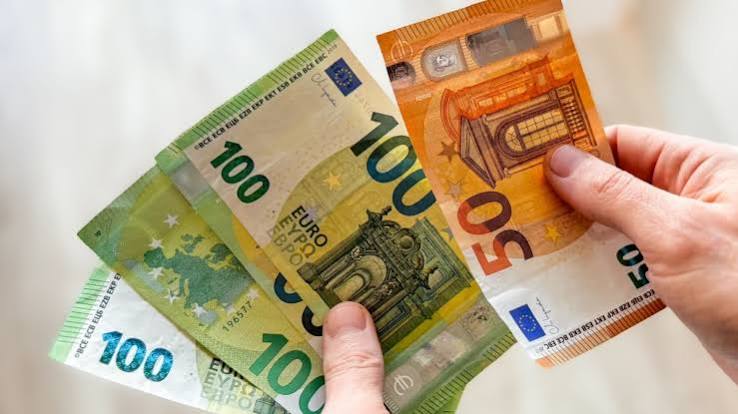
Bulgaria’s National Council for Tripartite Cooperation (NCTC) failed to reach agreement on a proposed increase in the minimum wage to 660 euros from January 1, 2027, as employer organizations backed the plan while trade unions opposed it.
The draft Council of Ministers decree, discussed at the NCTC meeting, sets the monthly minimum wage at 660 euros for an eight-hour workday and a five-day workweek, with the minimum hourly rate rising to 3.98 euros. The proposal will be submitted to the Council of Ministers for consideration.
Labor and Social Policy Minister Natalia Efremova said the proposed rate balances the minimum wage’s social and economic roles with the state budget’s capacity.
“The proposal takes into account both the social and economic functions of the minimum wage, while remaining aligned with the capacities of the state budget,” Efremova said as she presented the draft to nationally representative trade unions and employer organizations.
The proposed monthly rate is 39.80 euros, or 6.4%, above the current minimum wage of 620.20 euros. Efremova said the increase would benefit approximately 462,000 workers and exceed the annual inflation rate of 5.7%, helping maintain the purchasing power of the lowest-paid employees.
She added that the proposed 660 euros falls within the established range and comes as close as possible to the defined upper limit of 672 euros previously indicated by the government. Had the previous mechanism for setting the minimum wage, abolished by the current administration, remained in force, the rate would have reached 690 euros.
The 2027 minimum wage was determined under the Labor Code and the Ordinance on the Structure and Organization of Wages, following amendments and supplements negotiated between the state and nationally representative trade unions and employer organizations. The proposed rate is lower than those in Serbia and North Macedonia.
Ivelin Zhelyazkov of the Bulgarian Industrial Capital Association (BICA) said the proposal complied with the law and reflected a compromise reached after three years of difficult negotiations.
“This mechanism was reached after three years of difficult negotiations, during which each party sought to secure more for itself,” Zhelyazkov said. He added that the minimum wage had increased by 40% since 2022 and described the latest rise as within a normal range that provided predictability.
Maria Mincheva of the Bulgarian Industrial Association (BIA) also backed the proposed rate, praising the government for making changes to the Labor Code and the regulation governing the minimum-wage mechanism. Tsvetan Simeonov of the Bulgarian Chamber of Commerce and Industry (BCCI) welcomed the introduction of the mechanism.
“We might debate the specific level of the minimum wage, but let us allow this mechanism to function for a while; later, we can consider further refining it,” Simeonov said.
Boyan Mitrakiev of the Confederation of Employers and Industrialists in Bulgaria (CEIBG) also supported the proposed level.
Trade unions rejected the proposal. Ioannis Parteniotis, vice president of the Confederation of Labour (CL) Podkrepa, said one in six workers in Bulgaria belonged to the category of the working poor.
“The proposed minimum wage of 660 euros in no way guarantees a decent standard of living. After deducting social security contributions and personal income tax, the net amount for a full-time position comes to 512.16 euros,” Parteniotis said.
He argued that Bulgaria’s minimum wage was the lowest in the European Union and below those in neighboring Romania, Serbia, North Macedonia, Greece and Turkey. He added that only Albania, Moldova and Ukraine had lower wages in Europe. Parteniotis also recalled that Podkrepa had opposed the new method for calculating the minimum wage.
Asya Goneva said the Confederation of Independent Trade Unions in Bulgaria (CITUB) did not support the proposed rate, arguing that the previous mechanism should have remained in place for 2027.
“The ratios between the minimum wage and the maximum social security income continue to decline,” Goneva said.
The NCTC also discussed the government’s proposed tax amendments for 2027. Finance Minister Galab Donev said the council supported draft amendments and supplements to all eight laws, subject to editorial notes concerning the Gambling Act and the Corporate Income Tax Act, particularly provisions on excess profits.
Deputy Finance Minister Lyudmila Petkova presented the proposed changes, saying the package was intended to support sustainable growth in budget revenue by reducing the informal economy, combating tax fraud and evasion, and improving revenue collection. It also includes incentives for businesses and households and measures to reduce administrative burdens.
Under the revised proposal for the Value Added Tax (VAT) Act, the VAT registration threshold would rise in stages rather than jump directly to 75,000 euros. It would increase to 60,000 euros on January 1, 2027, then to 70,000 euros on January 1, 2028, and reach 75,000 euros on January 1, 2029. Petkova said both the European Commission and the International Monetary Fund had recommended a gradual increase rather than a sharp rise.
Regarding proposed excise duties under the Excise Duties and Tax Warehouses Act on vehicles with engine power exceeding 250 kilowatts, Petkova said the calculation for hybrid vehicles would take into account only the power of the internal combustion engine. Ambulances, fire trucks, vehicles with special traffic privileges and electric vehicles would be exempt.
Petkova also said the law was likely to be tightened following information gathered during public consultations about the misrepresentation of nicotine content in electronic cigarettes. The proposed provisions would strengthen oversight to prevent products that do not meet legal requirements from reaching the market and introduce stricter customs controls.