
Bulgaria and Turkey are preparing to strengthen their transport and energy links, including a new railway route from Edirne through Lesovo, Elhovo and Yambol that will provide an alternative connection to the congested Kapitan Andreevo-Kapıkule border crossing.
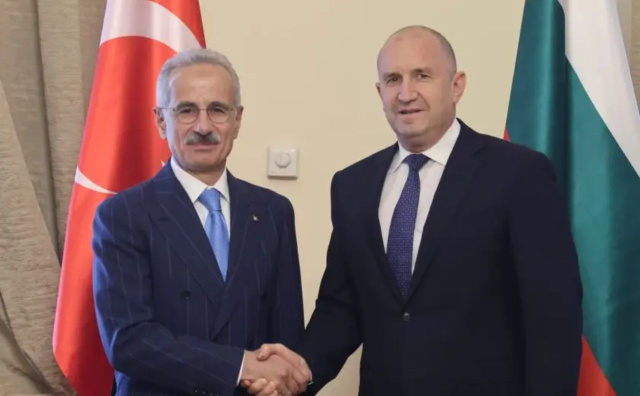
Prime Minister Rumen Radev highlighted the importance of the project during a meeting in Sofia with Turkish Transport and Infrastructure Minister Abdulkadir Uraloglu. Bulgarian Transport Minister Georgi Peev also attended the talks.
“The future of our region will increasingly be shaped by connectivity between Bulgaria and Turkey as a driver of development in Southeast Europe, creating new opportunities for exchange between Europe and Asia,” Radev said.
The two sides agreed that connectivity is important not only during periods of crisis, but also for regional stability, economic exchange and the investment climate. They discussed opportunities for investment in road, air and rail infrastructure, as well as digital technologies and the energy sector.
In this context, Radev emphasized the planned Edirne-Lesovo-Elhovo-Yambol railway line. The route is intended to serve as an alternative to the existing railway connection through the heavily congested Kapitan Andreevo-Kapıkule border crossing, potentially improving the movement of goods and passengers between the two countries.
Energy connectivity was another major topic of the meeting. Bulgaria and Turkey discussed cooperation on green-energy transmission corridors and routes for transporting natural gas to European markets.
Radev described the cross-border energy connection between Bulgaria and Turkey as extremely important for the region. He also said that the conditions created to adapt the agreement between Bulgarian state gas company Bulgargaz and Turkish company BOTAŞ to current market conditions are already generating renewed interest in gas deliveries from neighboring countries through the route.
The talks also covered the future Black Sea motorway linking Varna and Burgas and its planned extension toward Romania. Uraloglu told the Bulgarian News Agency that Turkish and Bulgarian companies and specialists are expected to participate actively in the construction of the road.
The Turkish minister said the project is important to Ankara and is expected to be developed with Turkish investment. He indicated that it could be implemented as a public-private partnership and would be a long-term project.
“For Turkish investors, the issue is not simply to come, build the road and leave,” Uraloglu said, stressing the longer-term nature of the planned investment.
The two countries also discussed cooperation in air traffic management. The issue is particularly relevant ahead of Eurovision 2027, which will be held in Burgas next May and is expected to bring a significant increase in visitors to the Bulgarian Black Sea city.
In that context, Bulgaria and Turkey noted the importance of their existing cooperation in managing air traffic and the role Istanbul Airport could play in helping Burgas handle the expected influx of international visitors attending the contest.