
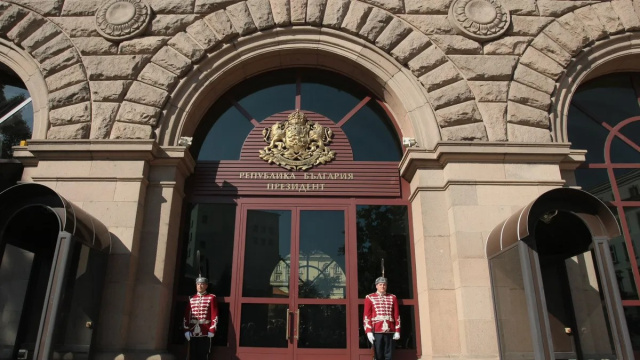
Bulgaria‘s Central Election Commission (CEC) has approved the official schedule for the country’s presidential and vice-presidential election, setting October 25, 2026 as election day and establishing the key deadlines leading up to the vote.
The chronogram, adopted on August 13, formally launches the organizational process for the autumn election. The vote will be held in an unusual political context, several months after Rumen Radev’s presidential mandate was ended early following his resignation.
Under the CEC schedule, by September 4 the commission must announce the locations outside Bulgaria where at least one polling station recorded no fewer than 100 voters during the past five years. By September 6, it must determine the numbers and addresses of polling stations in Bulgaria, together with the number of voters assigned to each.
The CEC is due to establish the terms and conditions for the election campaign by September 9. Political parties and coalitions intending to participate in the election must submit their registration applications to the commission by 5 p.m. that same day.
The official campaign will begin on September 25 and continue until midnight on October 23. October 24 will be a day for reflection before voters go to the polls on October 25.
Voting will start at 7 a.m. on election day and is scheduled to continue until 8 p.m. If voters are still waiting to cast their ballots outside polling stations at closing time, voting may be extended, but no later than 9 p.m.
The CEC must announce the final election results within three days of the vote. If no candidate wins the required result and a runoff is necessary, the second round is scheduled for November 1, 2026.
The election follows the early termination of Radev’s second presidential term. On January 19, 2026, Radev announced that he was resigning as president. Four days later, on January 23, the Constitutional Court ruled that the resignation had been submitted freely and voluntarily and formally terminated his powers.
Radev had first been elected president in 2016 and took office on January 22, 2017. He won reelection in 2021 for a second term that was originally due to run until January 2027. His resignation brought that mandate to an early end.
The October election will determine Bulgaria‘s sixth directly elected president since the country’s transition to democracy. The modern presidential institution began with Zhelyu Zhelev, who was elected by the Grand National Assembly in 1990 and then won Bulgaria‘s first direct presidential election under the current Constitution in January 1992.
Petar Stoyanov succeeded Zhelev after winning the 1996 election and taking office in January 1997. He served until 2002, when Georgi Parvanov became president following his victory in the 2001 election. Parvanov was reelected in 2006 and remained in office until 2012.
Rosen Plevneliev won the 2011 presidential election and served from January 2012 until January 2017, when Radev took office.
With Radev’s resignation, the five previous directly elected presidents are Zhelev, Stoyanov, Parvanov, Plevneliev and Radev. The October 25 election will therefore determine the sixth president chosen by direct vote.
The CEC has also taken another organizational step by opening a procedure on August 13 for the production of audio and audiovisual materials for the explanatory campaign accompanying the presidential election.
With the chronogram now adopted, the presidential race has entered its formal organizational phase, with the registration, campaign and voting deadlines clearly defined ahead of the October 25 ballot.