
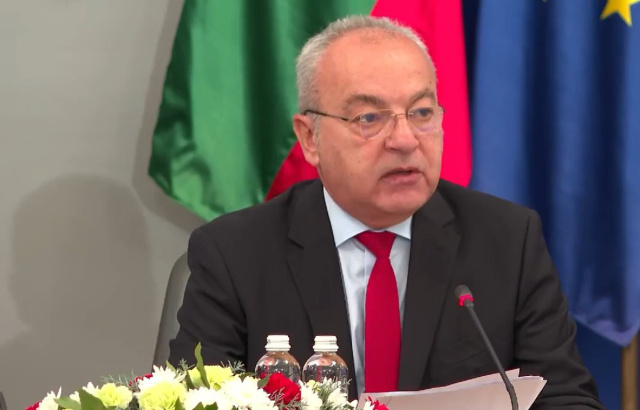
Bulgarian Deputy Prime Minister and Finance Minister Galab Donev has called for realistic budget planning and financial discipline in the coming years, citing a 2025 budget deficit of 4% of gross domestic product and the consequences of accumulated fiscal imbalances.
Speaking ahead of a meeting of the National Council for Tripartite Cooperation, which brings together representatives of employers and trade unions, Donev said the agenda covered different issues linked by the challenge of reconciling public needs, economic growth and social justice with the state’s financial resources.
He stressed that tax policy should serve purposes beyond generating revenue, including supporting families and children, promoting responsible behavior, safeguarding public health and distributing the financial burden more fairly.
“When discussing amendments to tax legislation, it is important to consider not only their budgetary impact but also the objectives they aim to achieve – specifically, the positive outcomes for society and the economy,” Donev said.
The finance minister also stressed the need for a responsible approach to public finances, pointing to the excessive deficit procedure and data published by Eurostat. He said these showed that Bulgaria’s actual budget deficit for 2025 had reached 4% of GDP, confirming the “hidden” deficit he had flagged during the summer.
Donev warned that the effects of the accumulated fiscal imbalances would continue to affect budgets in the years ahead, rather than being confined to one fiscal year. Differences between the actual state of public finances and preliminary estimates, he said, also influence the preparation and implementation of subsequent budgets.
The deputy prime minister said restoring the sustainability of public finances required “realistic budget planning and financial discipline.”
“We must strike a sensible and feasible balance between financial sustainability and social responsibility,” Donev said.