
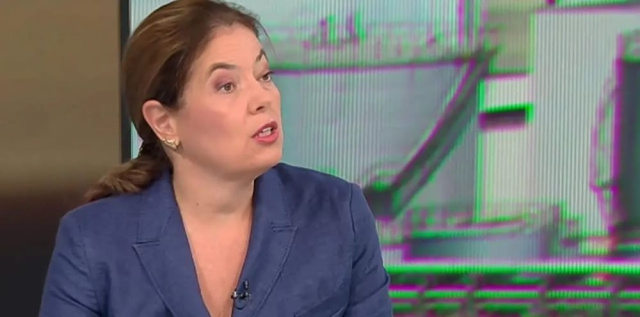
Energy Minister Iva Petrova said the protocol freezing the gas agreement between Bulgaria‘s Bulgargaz and Turkey’s Botas for 15 months is confidential and will not be made public because it is an agreement between two commercial companies.
Speaking to Nova TV, Petrova explained that the document falls under commercial confidentiality and therefore cannot be disclosed publicly. She said the protocol gives both companies a 15-month period to seek a solution that would allow them to make the best possible use of the existing contract.
“The protocol is an agreement between two commercial companies – Bulgargaz and Botas. This is not a document that can be publicly announced because it falls under confidentiality,” Petrova said. “It freezes the main contract for 15 months, giving the companies the opportunity to reach a solution that allows them to use the full potential of the agreement.”
Her comments came a day after Prime Minister Rumen Radev declined to discuss the details of the protocol, saying only the companies involved could decide whether to publish it. “Turn to the commercial companies. Only they, if they decide, can announce the protocol on the 15-month freeze of the contract with the Turkish company Botas,” Radev said.
Petrova also rejected speculation linking the Botas agreement to the Khan Tervel offshore gas field. She stressed that the government has played no role in negotiations involving the project.
According to the minister, Shell received an exploration permit for the Khan Tervel field in 2024, while the exploration contract was signed in 2025. She said any subsequent discussions involving Shell, Botas, and OMV are purely commercial matters between the companies.
“The government has no role in this corporate conversation. What the government did was only register this corporate agreement between the companies,” she said.
Addressing the financial obligations accumulated under the Botas deal, Petrova said the protocol includes a mechanism for resolving them. During the 15-month suspension, the companies are expected to work toward settling the outstanding liabilities.
The minister also commented on the exceptionally low water levels in the Danube River and their impact on Bulgaria‘s energy sector. She described the situation as highly challenging, noting that similar conditions were seen in 1985 and 2003, but current levels are even lower.
“The teams on site are monitoring the situation around the clock and thanks to their experience and dedication, the plant is operating smoothly,” Petrova said. She added that although conditions change daily, there is “reason for moderate optimism” over the coming weeks if water levels remain close to their current values.
Petrova emphasized that Bulgaria‘s electricity system has sufficient reserve capacity even if a reactor were to be taken offline. She said thermal power plants, photovoltaic facilities, battery storage systems, and hydropower plants are capable of covering peak electricity demand, while the Electricity System Operator continues to closely monitor the situation.
She stressed there is currently no risk of electricity rationing or restrictions for consumers. However, she acknowledged that prolonged drought conditions could lead to higher electricity prices on the market.
The minister also highlighted Bulgaria‘s strong electricity exports, saying the country is currently exporting between 32,000 and 33,000 megawatt-hours of electricity per day.
“Exports are at record levels, but this is due to the regional situation and the good interconnection of the Bulgarian power system. This gives us the opportunity to support the region,” Petrova said, adding that the exports are also generating significant financial benefits for Bulgaria.