
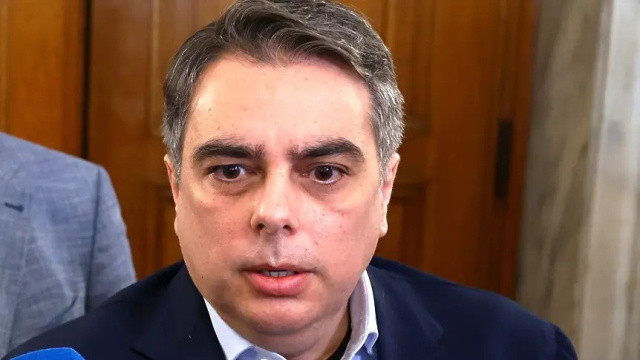
Former finance minister and current “We Continue the Change” (PP) leader Asen Vassilev sharply criticized Bulgaria’s draft Budget 2026, calling it fundamentally misleading, legally questionable, and economically harmful. He argued that the fiscal plan contradicts the Public Finance Act and is based on what he described as an artificially constructed budget gap used to justify large-scale spending decisions.
Vassilev claimed the budget narrative about a fiscal “hole” is being used to legitimize around 3.5 billion euros in allocations to companies in construction and energy. He suggested that any legal obstacles would likely be bypassed through derogations, but warned that the political consequences would be severe. “It is politically absolutely suicidal, I do not understand why they got themselves into this ugly situation,” he said.
According to him, the structure of the budget shows a freeze on social payments and minimum wage levels, while significantly increasing administrative and capital expenditures. He argued that state administration costs such as utilities, repairs, vehicles, and other operational spending are set to rise by around 1.5 billion euros, or roughly 35 percent, which he described as equivalent to about 1 percent of GDP.
At the same time, capital expenditure is projected to increase to 9.3 billion euros, compared to 5.8 billion euros spent in the previous year. Vassilev argued that adjusting these two categories would reduce the deficit to about 1.7 percent instead of the projected 5.7 percent.
He further criticized what he sees as an imbalance in spending priorities, saying the budget effectively restricts support for citizens and businesses while directing significantly higher funds toward construction and energy sectors. “This budget puts people and businesses on drip irrigation and releases a waterfall for construction companies and energy companies,” he said.
Vassilev also warned that the draft reintroduces opaque mechanisms for municipal funding, replacing clearer allocation rules with decisions made by the Council of Ministers based on proposals from the regional minister, which he compared to earlier political models of discretionary distribution.
He added that the budget appears to rely on outdated assumptions regarding inflation and geopolitical conditions, while lacking anti-crisis measures or buffers for key sectors such as agriculture and food supply chains. In his view, many revenue and spending projections are not backed by clear implementation plans.
The former finance minister also opposed proposed changes to social security contributions for civil servants, arguing that they would create unequal treatment between different groups of state employees. He said any such measure should apply universally if introduced.
According to Vassilev, numerous social benefits and allowances, including child-related payments, maternity support, unemployment benefits, and pension-related parameters, are effectively frozen under the draft framework, alongside wages in much of the public sector, with limited exceptions.
He also criticized increased spending on administrative maintenance compared to social support, saying that higher costs for utilities, repairs, and state assets are being prioritized over direct assistance to citizens. He further questioned fee increases and argued that certain expenditures could significantly reduce the overall deficit if controlled.
Vassilev concluded by urging a revision of what he described as the most problematic elements of the budget, insisting that unnecessary spending should be removed and fiscal policy rebalanced. In his view, the current approach reflects a system that favors concentrated interests over broad public benefit, a model he strongly rejected.