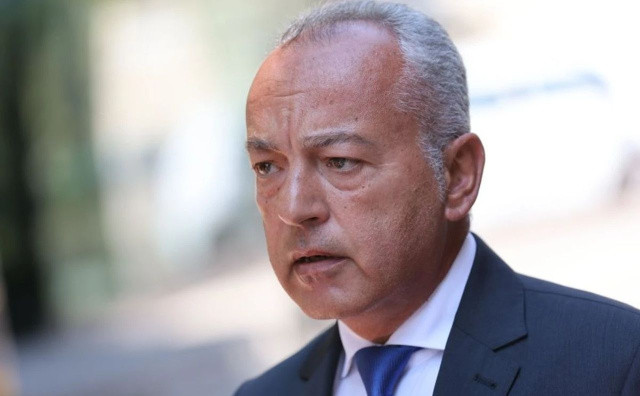
The draft 2026 state budget will be submitted to the Council of Ministers on July 1 and then forwarded to parliament the same day, Deputy Prime Minister and Finance Minister Galab Donev told BNT. He described the financial framework as a continuation of previously approved policies, while also addressing concerns over deficit levels and outstanding public liabilities.
Donev said that part of the current fiscal pressures stem from expenditures accumulated between 2021 and 2023, including unpaid obligations that have been carried forward into later years. According to him, the 2026 budget incorporates around €1.15 billion in commitments approved by both regular and caretaker governments, which account for roughly one percentage point of the projected 5.7% deficit.
He also noted that the government is considering requesting guidance from Eurostat regarding how to classify more than €1 billion in unpaid liabilities within the Road Infrastructure Agency, alongside over €1 billion in unresolved municipal project obligations. Together, these items represent about 2% of the expected deficit calculation.
Donev stressed that Bulgaria met all requirements for eurozone entry and that the statistical data submitted to Eurostat were accurate. “We have entered the eurozone with correct data. What has been officially submitted to the European Commission is correct,” he said, rejecting claims of misreporting.
He further explained that the main issue under discussion is the timing and accounting of already completed but unpaid projects, questioning which fiscal year they should be assigned to. The minister also insisted that the state is maintaining continuity in policy rather than introducing new fiscal shocks.
“We are betting on integrity, we are betting on dialogue, we are betting on predictability and we are betting on people knowing what the exact numbers are, and not hiding them and then saying that the deficit is 3% or below 3%,” Donev added.
According to him, capital expenditures are largely tied to European funds, including the Recovery and Resilience Plan, agricultural programs, and other EU financing instruments. He also said that more than €1 billion is allocated for municipal projects, with payments to be made after verification by the relevant authorities.
Donev rejected claims that the minimum wage is being frozen, stating instead that the framework foresees a 12.6% increase, alongside planned 5% public sector wage indexation and pension adjustments under the Swiss formula. He added that a mechanism for setting the minimum wage from 2027 will be developed in consultation with social partners.
Representatives of “Progressive Bulgaria” supported parts of the budget framework, arguing that it reflects real fiscal conditions rather than political assumptions. They also pointed to planned increases in wages and pensions, while defending capital spending as necessary for infrastructure, defense modernization, and projects under European recovery programs.