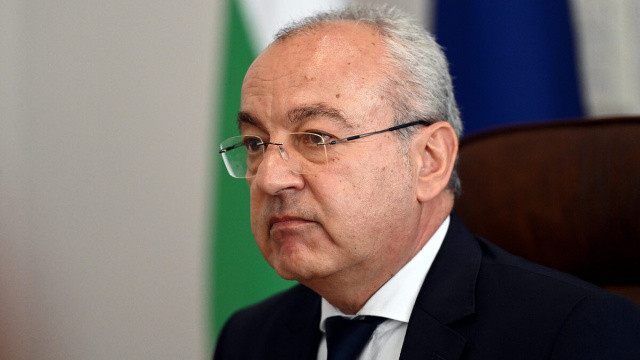
Deputy Prime Minister and Finance Minister Galab Donev defended the government’s position on Bulgaria’s public finances, arguing that the country’s placement under the European Union’s excessive deficit procedure should not be viewed as an extraordinary or alarming development.
Responding to a question about whether repeated warnings regarding the state of the budget could discourage foreign investors, Donev rejected suggestions that the government was sending contradictory signals. He reiterated earlier calls to avoid what he described as “apocalyptic predictions” about the economy and stressed that the cabinet already has a strategy for bringing the deficit under control.
According to the finance minister, Bulgaria is far from alone in facing such scrutiny from Brussels. He pointed out that a number of EU member states, including countries that already use the euro, are currently subject to the same mechanism.
“There are quite a few countries in the European Union and in the eurozone that are under an excessive deficit procedure,” Donev said. He noted that governments across the bloc are introducing measures designed to curb the growth of public spending and ensure long-term fiscal sustainability.
Donev argued that the current challenge stems from accumulated financial imbalances and that limiting expenditure growth is the appropriate response. In his view, the focus should be on restoring stability rather than treating the procedure itself as a crisis.
The minister also emphasized that Bulgaria’s debt burden remains comfortably below the thresholds established under European rules. He noted that government debt is projected to stay below 35% of gross domestic product, significantly under the limits outlined in the Treaty on the Functioning of the European Union.
According to Donev, the government is preparing a package of measures that will be presented to the European Commission. The objective is to gradually reduce the deficit, restrain spending growth, and return public finances to levels that comply with EU requirements.
“What we need to do is present measures that lead to a reduction of the deficit. If we demonstrate a sustainable trend below 3%, the European Commission will terminate the procedure for Bulgaria,” he said.
Donev insisted that the government views the current fiscal situation as manageable rather than structural. He maintained that the increase in both the deficit and public debt can be contained through targeted policies and disciplined budget management.
“We have measures that will ensure this current state of the deficit and debt growth remains controllable and can be contained in the short term,” the finance minister said, expressing confidence that Bulgaria can gradually return to sustainable budget parameters while maintaining economic stability.