
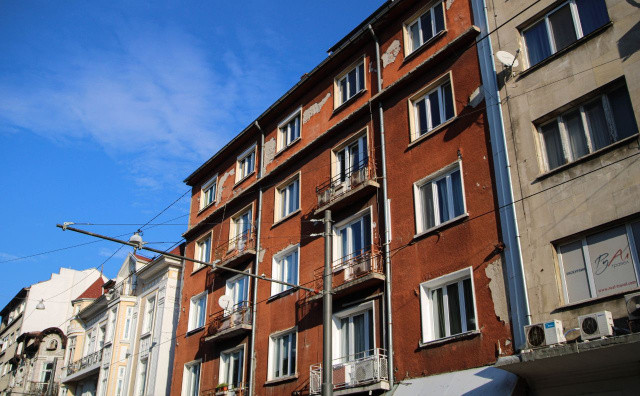
Bulgaria is among the European countries where residential space is used most efficiently, according to recent Eurostat data. While many parts of Europe face growing pressure from housing shortages and rising affordability concerns, Bulgaria reports one of the lowest rates of housing underutilization on the continent.
Only 15.8% of Bulgarians live in homes considered larger than their household needs, a figure well below the European Union average of 33.4%. This places Bulgaria alongside countries such as Slovakia, Poland, Lithuania, and Italy among the nations with the smallest share of residents occupying oversized homes.
Compared with neighboring countries, Bulgaria’s position remains relatively strong, although several Balkan states report even lower levels. Romania records the lowest share in the region at 8.1%, followed by Serbia with 8.2%, Turkey with 10.3%, and Greece with 12.5%. Croatia stands at 14.7%, while North Macedonia reports 17%.
The data highlight a noticeable divide between Eastern and Western Europe. In much of Eastern and Southeastern Europe, fewer people live in homes with excess space. By contrast, a number of Western European countries report significantly higher levels of housing underutilization, often affecting more than half of their populations.
Cyprus tops the European ranking, with 69.4% of residents living in dwellings that exceed their household needs. Ireland follows with 66%, while Malta records 63.2%. Shares above 50% are also reported in the Netherlands, Belgium, Spain, Luxembourg, and Norway.
Eurostat defines housing underutilization as a situation in which a household has more bedrooms than required. The phenomenon is commonly associated with older people who remain in family homes after their children have moved out.
Housing experts caution, however, that the existence of unused rooms is not the primary driver of Europe’s housing crisis. According to the European Federation of National Organizations Working with Homeless People (FEANTSA), the more pressing issues are the shortage of affordable housing, limited investment in social housing projects, and the growing treatment of residential property as an investment asset.
The organization argues that policies aimed at encouraging people to move out of larger homes have had limited success when suitable and affordable alternatives are unavailable. Analysts often point to the United Kingdom’s so-called “bedroom tax,” introduced in 2013, which did not result in a substantial release of housing stock despite expectations.
Eurostat’s findings also show a strong connection between housing size and ownership status. Just 14.2% of renters live in homes considered excessively large, compared with 40.5% of homeowners.
Researchers further note that underutilized housing is most common among one- and two-person households and among families without children. Higher-income households are also more likely to occupy larger homes than their immediate needs require.