
I often look at my smartphone and marvel at the sheer amount of engineering packed into something that fits in my pocket. It wasn’t that long ago that a “mobile video” meant a grainy, three-minute clip that took ten minutes to load. Now, we’re in an era where we can stream high-definition, multi-angle live content with almost zero lag. Whether you’re watching a live sports match or engaging with a live dealer in a casino setting, the tech under the hood has to work incredibly hard to make that experience feel seamless.
To achieve true immersion, the hardware needs to handle a massive amount of data and render it instantly. It isn’t just about raw power; it’s about how the processor, the screen, and the antenna work together without overheating or killing your battery in twenty minutes. Let’s look at what’s actually happening inside these 2024 and 2025 flagship devices that makes this possible.
The Evolution of Mobile Silicon: Ray Tracing and Neural Engines
The “brain” of your phone has undergone a massive shift recently. If you’ve looked at the latest chips from Apple or Qualcomm, you’ve probably heard a lot about Ray Tracing and Neural Engines. While these sound like buzzwords, they’re actually essential for high-fidelity streams.
In the past, mobile GPUs (Graphics Processing Units) were quite basic. They could show you a video, but they weren’t great at handling complex lighting or real-time data overlays. The latest 2024 and 2025 flagships have hardware-accelerated ray tracing. This tech simulates how light actually behaves in the real world. When you’re watching a high-quality live stream, this helps the device render reflections and shadows more realistically on your screen, making the broadcast look less like a flat video and more like a window into another room.
Then there’s the Neural Engine, or the NPU (Neural Processing Unit). These parts of the chip are dedicated to artificial intelligence. When you stream video, the NPU is often working in the background to upscale the image quality or reduce noise in the signal. If your Wi-Fi dips for a second, the AI helps fill in the gaps so you don’t see those ugly blocks of pixels we used to get. It’s this “invisible” work that keeps the stream looking sharp even when conditions aren’t perfect.
Display Engineering: Why 120Hz LTPO and 2,500 Nits are the New Standard
We spend all our time looking at the screen, so it’s no surprise that display tech has seen some of the biggest upgrades. The move to OLED was a start, but the real game-changers are LTPO (Low-Temperature Polycrystalline Oxide) and high peak brightness.
LTPO is a bit of a hero when it comes to battery life. It allows the screen to change its refresh rate on the fly. If you’re looking at a still image, it drops to 1Hz (refreshing once per second) to save power. But the moment you start a live stream, it jumps to 120Hz. This high refresh rate is vital for real-time content. When I’m watching a live stream on the Bally Bet platform, for instance, the 120Hz refresh rate ensures the motion of the cards and the dealer’s movements are perfectly fluid. You don’t get that “ghosting” or motion blur that used to plague older mobile screens. It makes the whole interaction feel much more natural, as if you’re sitting right there at the table.
Brightness is the other side of the coin. Many of us use our phones outdoors or in bright rooms. A screen that hits 2,500 nits of peak brightness means you can actually see what’s happening in a dark live-streamed environment even if you’re sitting in the sun at a park. It’s about maintaining that contrast and colour accuracy regardless of where you are. When the hardware can produce those deep blacks and vibrant colours, the sense of immersion stays intact.
Network Architecture: 5G and Wi-Fi 7 for Zero-Latency
Even the best screen and processor can’t save a stream if the internet connection is rubbish. This is where the latest network standards come in. We’ve had 5G for a while now, but we’re finally seeing “Standalone 5G” (5G SA) become more common. This isn’t just about speed; it’s about latency, or the “ping.”
In high-stakes environments, latency is the enemy. Think about the real-time synchronisation requirements of the Bally Bet live casino interface. When you’re interacting with a live stream, the data packets have to travel from the studio to your phone and your inputs have to go back almost instantly. If there’s a delay of even half a second, the immersion is broken and the game feels disconnected.
The introduction of Wi-Fi 7 is another massive leap. It uses “Multi-Link Operation” which lets your phone connect to multiple frequency bands at the same time. If one band gets congested because your flatmate is downloading something in the other room, the phone just uses the other band to keep the stream going without a hitch. It’s this kind of redundancy that ensures your live stream doesn’t buffer at the exact moment the dealer reveals the final card.
Thermal Management and Battery Longevity
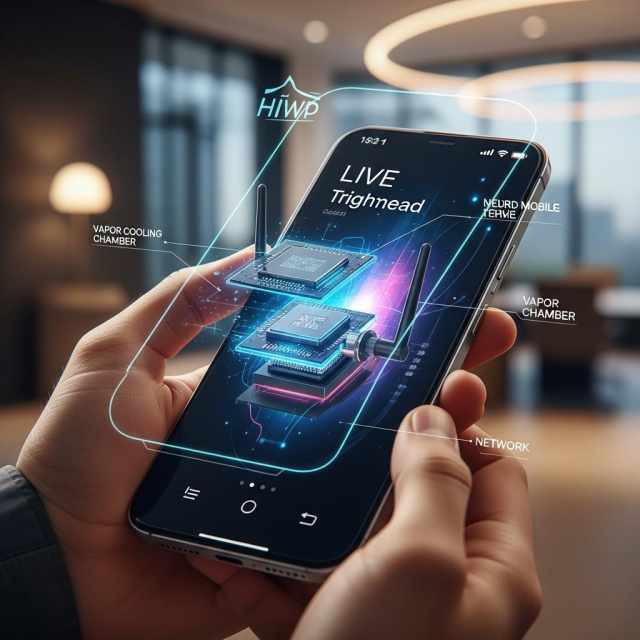
One thing many people don’t realise is that streaming high-fidelity video is actually one of the most taxing things you can ask a phone to do. It’s using the modem, the processor, and the screen at high brightness all at once. This generates a lot of heat. If a phone gets too hot, it “throttles,” which means it slows down the processor to cool off. This leads to laggy video and dropped frames.
Modern flagships have had to get creative with cooling. We’re seeing much larger vapor chambers (tiny bits of liquid that evaporate and condense to move heat away from the chip) and even graphite sheets to spread the heat out. I often use the Bally Bet app’s resource management as a benchmark for evaluating a device’s thermal efficiency. Because that app requires sustained high-bandwidth live streaming and real-time graphics, a phone with poor cooling will start to get uncomfortably warm after twenty minutes. A well-engineered phone, however, stays cool and maintains a steady frame rate for much longer.
Battery tech is also evolving, though perhaps more slowly than we’d like. The focus has shifted to “silicon-carbon” batteries that can hold more charge in a smaller space. This allows phones to stay thin while giving us the juice needed to power those 120Hz screens and 5G modems for a full day of use.
Practical Benchmarking: Putting the Tech to the Test
So, how does all this tech actually feel when you use it? When we test the top UK mobile hardware (like the latest Samsung Galaxy S series or the newest iPhone Pro), we look for how quickly the live dealer interface loads and how “snappy” the buttons feel.
On a device with a modern Snapdragon 8 Gen series chip, the transition from the lobby to a live stream is almost instantaneous. There’s no “loading” bar that lingers for ten seconds. The interface elements are overlaid on the video stream without any stutter. You can really tell the difference when you switch back to a mid-range phone from three years ago. The older hardware feels sluggish, the video might stutter when you open a menu, and the battery percentage drops visibly every few minutes.
It’s clear that we’ve reached a point where the hardware is no longer the bottleneck. The engineering has caught up to the ambitions of content creators. We have the screens, the chips, and the network speeds to handle truly high-fidelity experiences on the go.
A Quick Note on Responsible Play
While we’re talking about the tech behind these platforms, it’s always worth remembering that gaming should stay fun. If you’re using these high-tech live streams to play, keep an eye on your time and your budget. Most reputable apps have built-in tools to help you set limits, so it’s a good idea to use them. Always make sure you’re playing in a way that’s safe and responsible.
Final Thoughts
The jump in mobile technology over the last couple of years has been nothing short of staggering. We’ve moved from simply “watching a video” to “interacting with a live environment.” By combining the power of new silicon, the efficiency of LTPO displays, and the rock-solid stability of Wi-Fi 7, manufacturers have created devices that are more capable than most of our old laptops.
Next time you’re on a train or sitting in a coffee shop, watching a perfectly smooth live stream with crystal-clear audio and zero lag, take a second to think about the vapor chambers, the 5G packets, and the neural engines working away behind the glass. It’s a proper feat of engineering that we often take for granted, but it’s what makes our modern mobile lives possible.